

On October 23, radiologists, oncologists, and other specialists gathered for the 4th edition of CCE’s virtual workshop on RECIST organized by Cancer Core Europe’s Imaging task force in partnership with the Education and Training pillar. The workshop provided an in-depth exploration of RECIST principles and other imaging-based criteria for evaluating cancer treatment. Attendees discussed the challenges of applying these standards, particularly in multicenter studies and clinical trials. The session also highlighted the growing role of radiomics and artificial intelligence (AI) in cancer care, focusing on how these technologies can enhance decision-making in targeted therapies and immunotherapy.
Understanding RECIST
The Response Evaluation Criteria in Solid Tumors (RECIST) is a standardized set of guidelines used in oncology to evaluate the response of solid tumors to treatment. Developed to provide a consistent approach to measuring tumor size, RECIST is crucial in clinical trials and cancer research. It classifies treatment outcomes into four categories: complete response (CR), partial response (PR), stable disease (SD), and progressive disease (PD). By focusing on specific target lesions—often the largest tumors—RECIST enables clinicians to evaluate the effectiveness of therapies and compare treatment outcomes across different protocols. This standardized approach not only supports clinical decision-making but also contributes to advancing cancer treatment and improving patient care.
Workshop Highlights
Held virtually, CCE’s workshop “RECIST in the Era of AI, Radiomics, and Beyond” is a joint effort of Cancer Core Europe’s Imaging task force and the Education and Training pillar. Led by Prof. Lennart Blomqvist, Karolinska University Hospital, and Dr. Raquel Pérez-Lopez, Vall d’Hebron Institute of Oncology, this multidisciplinary and interactive session featured renowned experts including Dr. Mireia Crispin Ortuzar (University of Cambridge), Dr. Vitali Grozman (Karolinska University Hospital), Dr. Ferry Lalezari (Netherlands Cancer Institute), Dr. Oliver Sedlaczek (German Cancer Research Center and University Hospital Heidelberg), and Dr. Marta Vaiani (Fondazione IRCCS Istituto Nazionale dei Tumori).
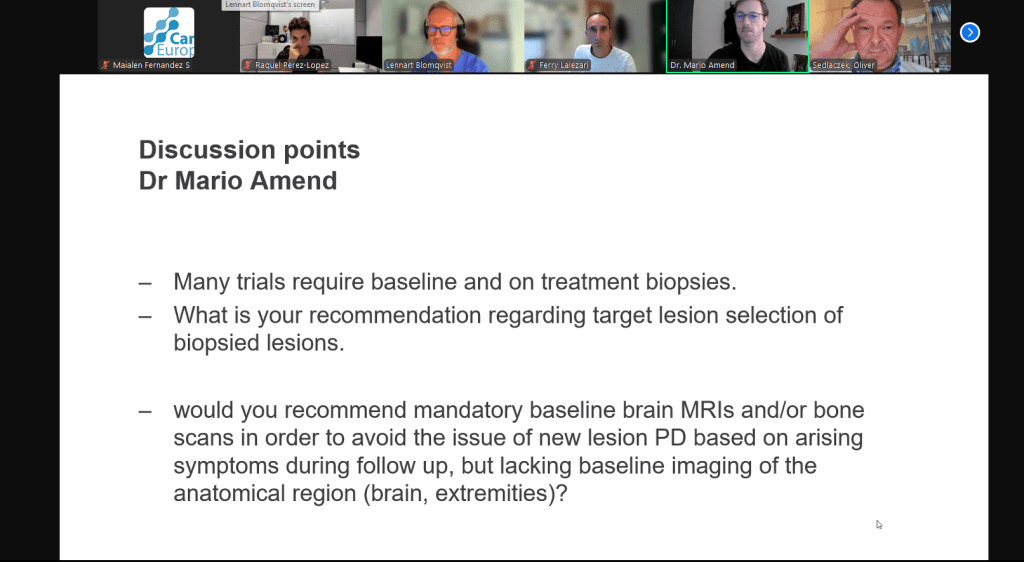
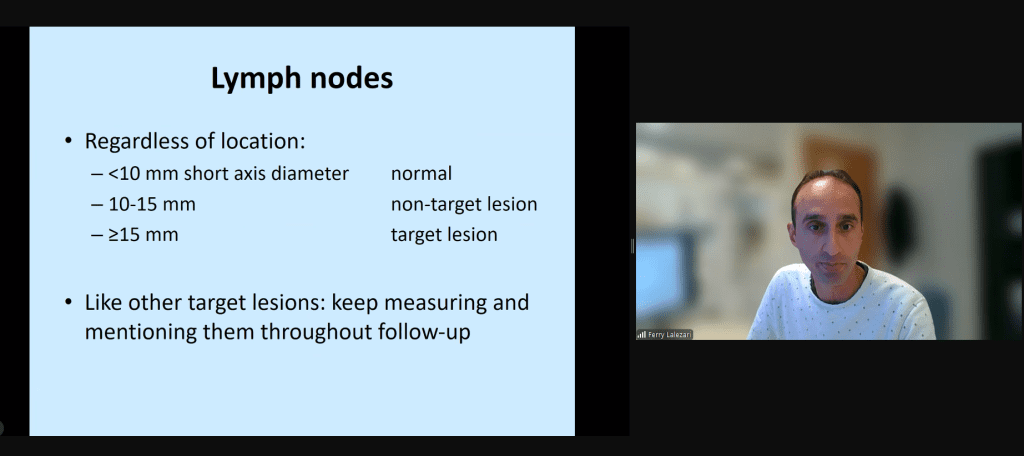
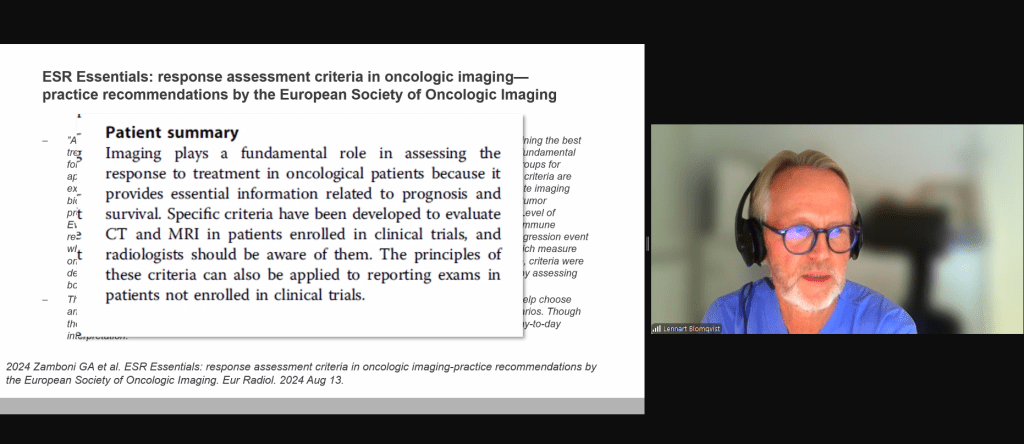
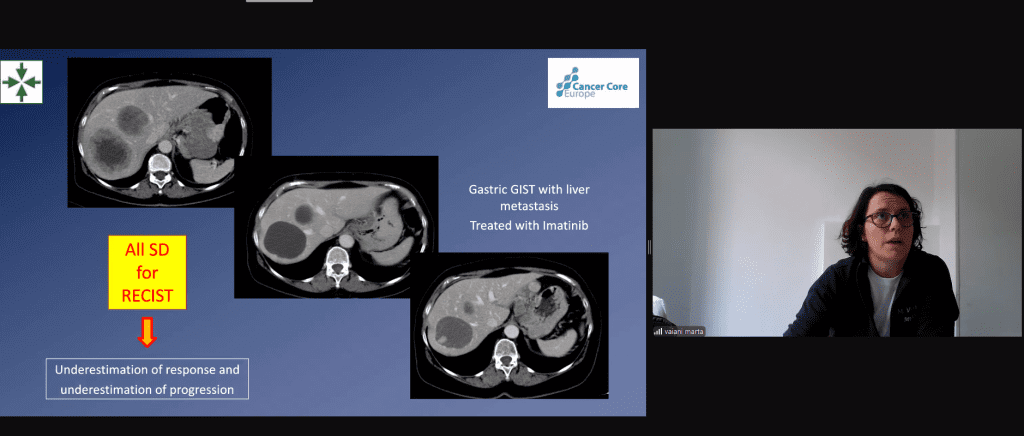
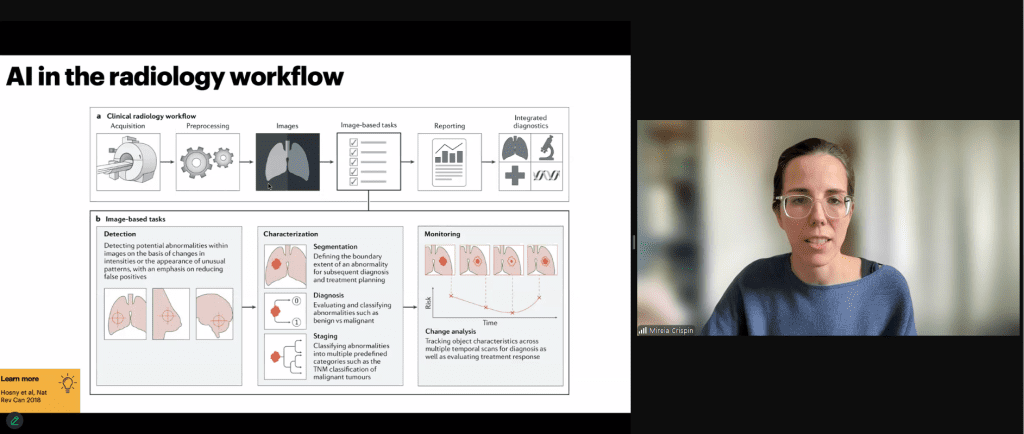
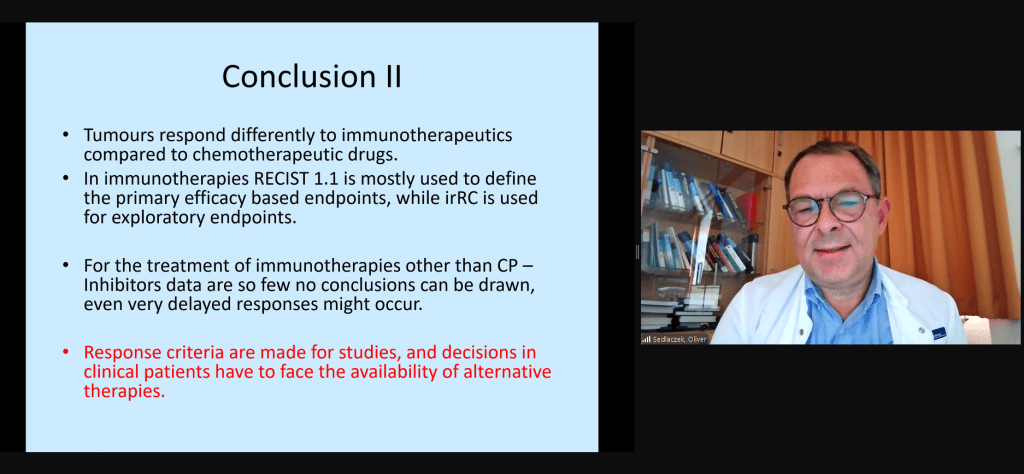
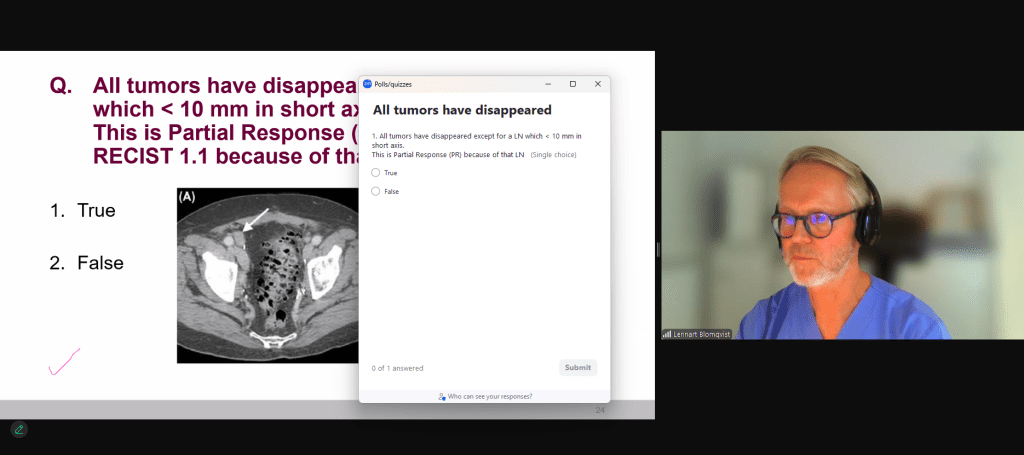
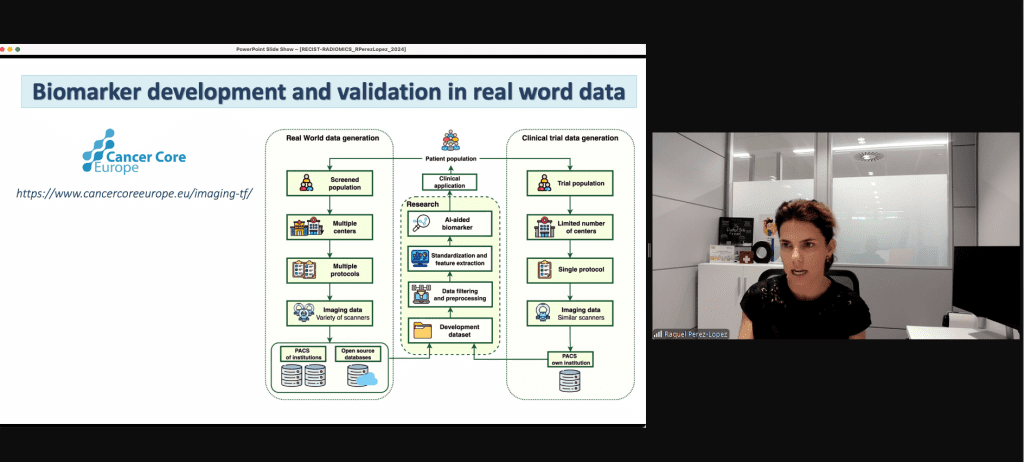
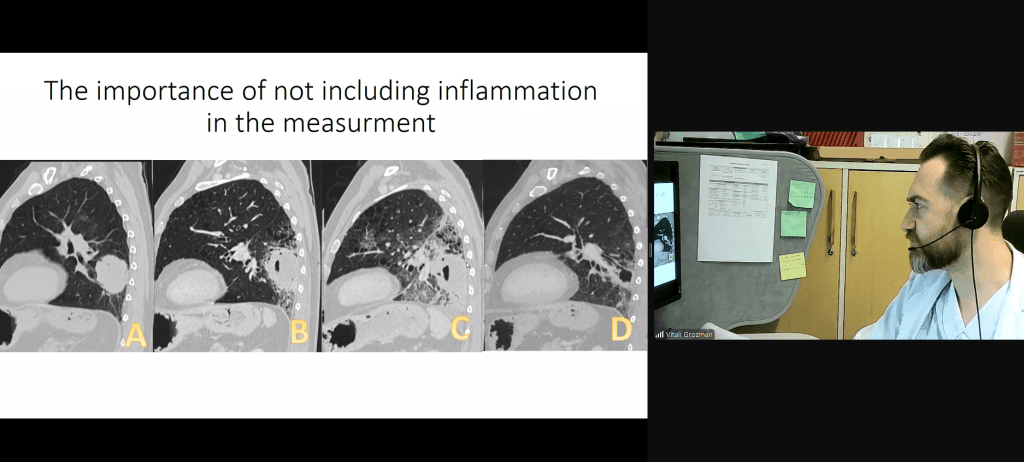
Attendees from Cancer Core Europe (CCE) centers and other institutions had the opportunity to deepen their knowledge of RECIST and other imaging-based criteria used to assess oncology treatments. The session also explored how AI and radiomics, combined with immunotherapy and targeted therapies, are reshaping cancer care. The workshop concluded with an interactive quiz led by Professor Blomqvist, where participants reviewed key concepts from the lectures. The quiz sparked further discussions, with speakers offering additional insights and learnings.
Integrating RECIST with AI and Radiomics
RECIST and radiomics are both important in oncology for assessing tumor response to treatment, although they play distinct functions that complement one another. By integrating AI into this process, both RECIST and radiomics become more powerful tools for analyzing complex imaging data. AI enhances the ability to detect patterns that may not be immediately visible to the human eye, thus improving the accuracy of treatment assessments and enabling more personalized therapies. This dynamic approach has the potential to significantly improve patient outcomes and transform cancer treatment strategies.
Consulted sources:
- Perez-Lopez, R., Ghaffari Laleh, N., Mahmood, F. et al. A guide to artificial intelligence for cancer researchers. Nat Rev Cancer 24, 427–441 (2024). https://doi.org/10.1038/s41568-024-00694-7
- Erica C. Nakajima et al. Tumor Size Is Not Everything: Advancing Radiomics as a Precision Medicine Biomarker in Oncology Drug Development and Clinical Care. A Report of a Multidisciplinary Workshop Coordinated by the RECIST Working Group. JCO Precis Oncol 8, e2300687(2024). DOI:10.1200/PO.23.00687
- Shivaani Kummar et al. Using Radiomics in Cancer Management. JCO Precis Oncol 8, e2400155(2024). DOI:10.1200/PO.24.00155
