
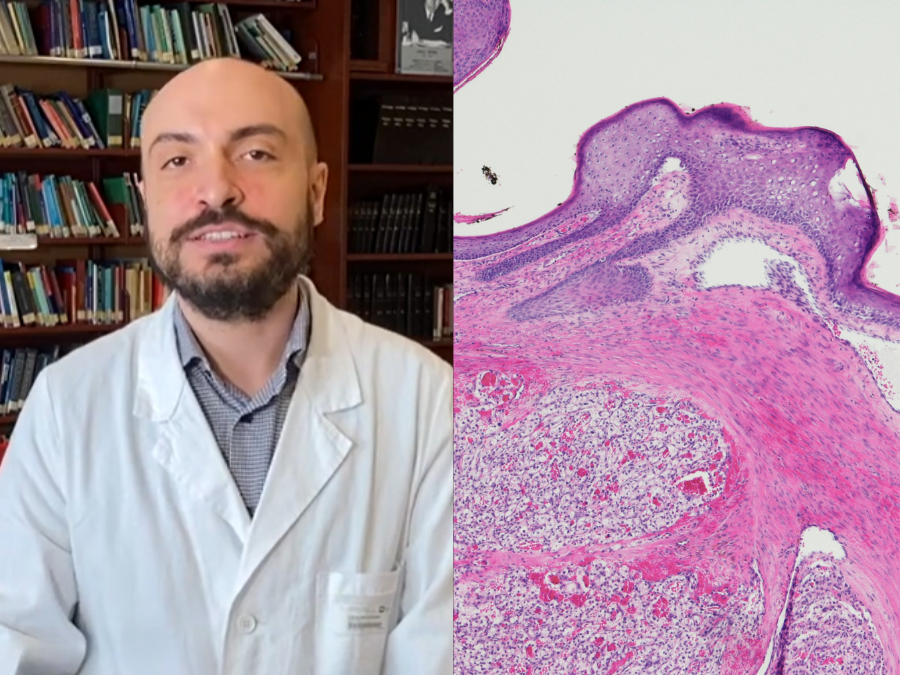
In April 2026, the CCE Lecture series welcomed Dr. Stefano Cavalieri, medical oncologist at Fondazione IRCCS Istituto Nazionale dei Tumori (INT) in Milan and the University of Milan. His talk explored how the integration of multi-omics data and artificial intelligence (AI) is reshaping clinical decision-making in head and neck cancer.
Data as a key driver of precision medicine
Cancer care is undergoing a profound transformation. Traditionally, treatments were selected based primarily on tumor location and stage. Today, precision oncology seeks to tailor therapies to the unique biological characteristics of each patient’s tumor.
This shift is driven by the growing availability of complex data, ranging from genomic and transcriptomic profiles to imaging and clinical records. Advanced computational tools, including AI, are increasingly used to analyze these datasets and uncover patterns that can guide more personalized and effective treatment strategies.
Why head and neck cancers need a new approach
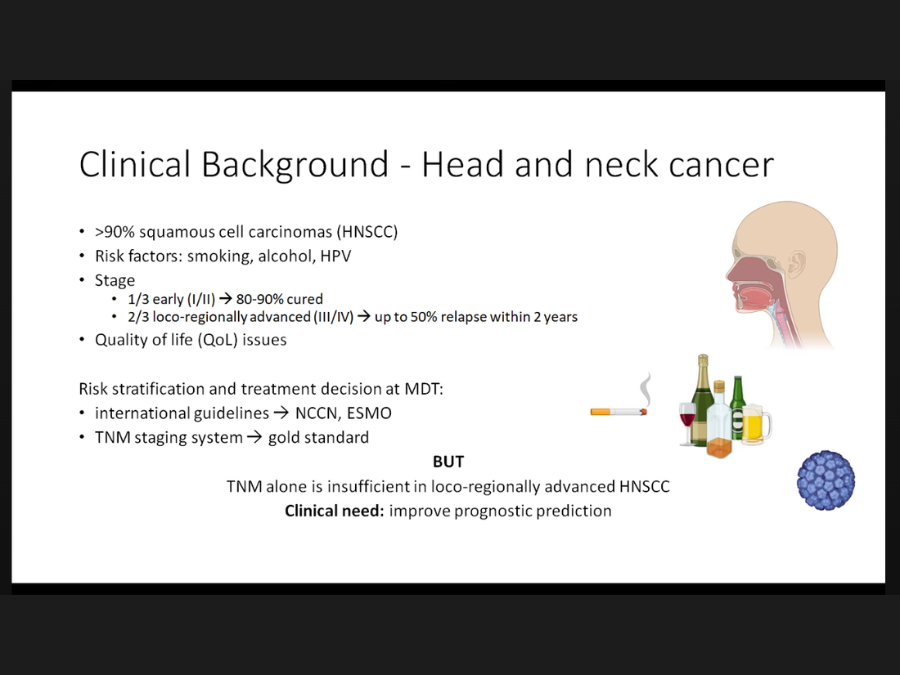
Head and neck cancers represent a highly heterogeneous group of diseases, meaning that patients with similar clinical diagnoses can experience markedly different outcomes. Despite this variability, treatment decisions are still largely guided by anatomical staging.
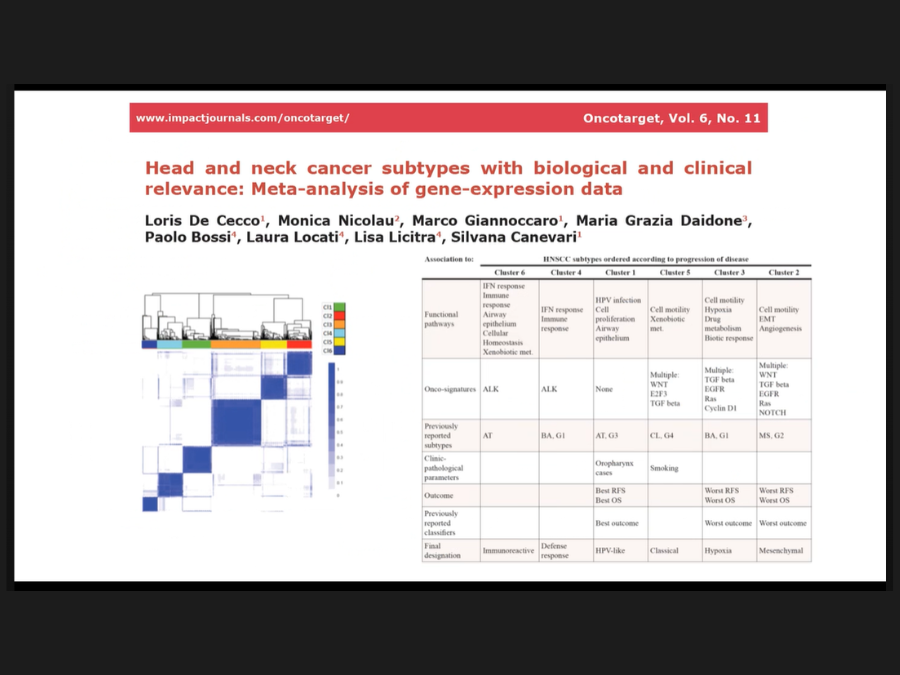
Recent advances are helping to overcome these limitations. The integration of multi-omics data, such as gene expression profiles, together with radiomics—quantitative features extracted from medical images—provides deeper insight into tumor biology. Gene expression–based classifications can inform prognosis and predict response to therapy, while imaging-derived data offer a non-invasive way to capture tumor heterogeneity. Together, these approaches enable a more refined and biologically informed stratification of patients.
From complex data to clinical decisions
A central theme of Dr. Cavalieri’s lecture was how to translate these diverse and complex data into actionable clinical insights. Integrating multi-dimensional data requires robust computational approaches, with artificial intelligence playing a key role in combining heterogeneous datasets into clinically meaningful predictions.
These advances are paving the way for clinical decision support systems designed to assist clinicians in selecting the most appropriate treatment strategies based on an individual patient’s profile.
Challenges for real-world implementation
Despite this progress, important challenges remain before these approaches can be fully integrated into routine clinical practice. Ensuring data harmonization across institutions and platforms is essential to enable meaningful comparisons and robust analyses. At the same time, AI-driven models must undergo rigorous validation to confirm their reliability and generalizability. Equally important is the need for clinical adoption, which requires integrating these tools into existing workflows in a way that is both practical and acceptable for healthcare professionals. Addressing these challenges will be critical to unlocking the full potential of precision oncology.
Beyond treatment selection, digital innovations are also transforming patient follow-up. Mobile health technologies are emerging as valuable tools to monitor patients, manage side effects, and improve quality of life after treatment. In this context, they offer new opportunities to strengthen survivorship care, an increasingly important aspect of oncology as patient outcomes continue to improve.
About Dr. Stefano Cavalieri
Dr. Stefano Cavalieri is a medical oncologist in the Head and Neck Medical Oncology Department at INT in Milan and a tenure-track researcher at the University of Milan. His clinical and research work focuses on head and neck and non-melanoma skin cancers, with particular interest in multi-omics integration, radiomics, and artificial intelligence to improve prognostic stratification and guide treatment decisions.
He has contributed to several national and international initiatives on big data–driven decision support systems and digital health in oncology, authored more than 100 peer-reviewed publications, and is actively involved in collaborative research networks in the field.
Consulted sources:
- Cavalieri S, De Cecco L, Monzani D, Mehanna H, Ferrarotto R, Simon C, Haddad R, Saintigny P, Le Tourneau C, Licitra L. Integrating transcriptomic data and artificial intelligence to personalize curative treatments for head and neck cancer patients. NPJ Precis Oncol. 2026 Mar 14. doi: 10.1038/s41698-026-01369-2. Online ahead of print. PMID: 41832233
- Wolde T, Bhardwaj V, Pandey V. Current Bioinformatics Tools in Precision Oncology. MedComm (2020). 2025 Jul 9;6(7):e70243. doi: 10.1002/mco2.70243. PMID: 40636286; PMCID: PMC12238682.
